The Research Network on Antisemitism in the 21st Century

Welcome

Welcome to the homepage of the Research Network on Antisemitism in the 21st Century (FoNA21). Since 2021, we have been connecting and supporting projects funded by the Federal Ministry of Research, Technology and Space (BMFTR) in the field of antisemitism research; these projects examine the causes, contexts, and manifestations of contemporary antisemitism in Germany from diverse perspectives and through various forms of inquiry. Through a variety of events and presentation formats, we facilitate knowledge transfer to the political sphere and society more broadly while also providing a space for dialogue.

FonA21 was established in 2021 as part of the funding program “Current Dynamics and Challenges of Antisemitism” of the Federal Ministry of Education and Research (BMBF, now BMFTR). We entered the second funding phase in January 2026 and are continuing our work as an accompanying project of this initiative. Following a new call for proposals by the BMFTR, thirteen additional projects have been selected, which we will support over the next five years. This expansion transforms FonA21 into an even larger network – one with an increasingly international focus – that more closely connects research, practice, and civil society while opening up new perspectives on antisemitism in the twenty-first century.

Publikationen

  • EMPATHIA³:
    Nicola Brauch: Eine herausfordernde Aufgabe für die Geschichtsdidaktik. Die Vermittlung der Shoah im Geschichtsunterricht in Deutschland, in: EMPATHIA³ Working Paper 6 (2026), https://empathia3.de/working-papers/.

  • RelcoDiff:
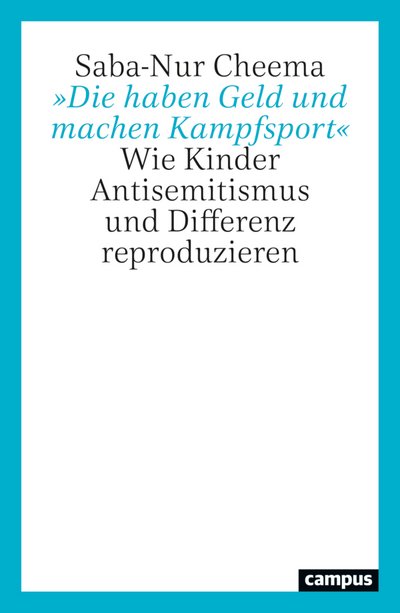
    Saba-Nur Cheema: »Die haben Geld und machen Kampfsport« Wie Kinder Antisemitismus und Differenz reproduzieren, Campus Frankfurt/New York 2026, S. 265 (https://campus.de/wissenschaft/soziologie/die-haben-geld-und-machen-kampfsport/CAM52240) .
  • EMPATHIA³:
    Jana-Andrea Frommer, Sarah Jadwiga Jahn: Eine Viktimilogie des Antisemitismus , in: Handbuch Viktimilogie. Theoretische Grundlagen, empirische Befunde und rechtliche Praxis, Springer Nature 2026, S. 555-579, (https://link.springer.com/chapter/10.1007/978-3-658-48467-5_23) .

Alle Publikationen

Antisemitism at Work (A³)
The societal problem of antisemitism extends to the workplace. This participatory research project combines interviews, experience sampling, and intervention strategies to understand and shed light on experiences of antisemitism at work.
Antisemitismus in der (p)ostmigrantischen Gesellschaft (AntOstMig)
Das Projekt AntOstMig untersucht Erfahrungen, Thematisierungsweisen und Formationen von Antisemitismus in jüdischen und nicht jüdischen russisch- und ukrainischsprachigen migrantischen Milieus in Deutschland.
Antisemitismus unter Studierenden an deutschen Universitäten (AnSU)
Das Forschungsprojekt Antisemitismus unter Studierenden an Deutschen Universitäten (AnSU) untersucht auf Initiative der Universität Leipzig empirisch die Verbreitung, Funktion und Wirksamkeit antisemitischer Ressentiments unter Studierenden an deutschen Hochschulen.
Antisemitism in Organizations for Children and Youth (ASJA)
The project identifies the support that professionals working in organizations for children and youth need when it comes to addressing and preventing antisemitism. These findings will allow us to develop, pilot, and evaluate tailored training programs.
Anerkennende Weltzuwendung und Antisemitismus (AWA)
Im Zentrum des Forschungsvorhabens steht die Konkretisierung und Prüfung des sowohl theoretisch als auch in der quantitativen Sozialforschung bisher kaum näher untersuchten Zusammenhangs zwischen identifizierenden und damit verkürzenden Zuwendungen zu Welt (und Selbst) einerseits und des Antisemitismus bzw. einer antisemitischen und/oder autoritären Weltsicht andererseits.
Spaces for Dialogue as Sites of Scenic Memory (DIALOGOS)
The project addresses experiences of antisemitism and the “scenic memory” of the Shoah within professionally facilitated spaces of dialogue, such as safer spaces, counseling, therapy, and awareness-raising efforts. It develops guidelines for practices of reflection and supervision to support practitioners in social work and mental health in becoming more sensitive to antisemitism in their professional development.
Decoding Antisemitism in YouTube Videos (DAYVid)
Das Projekt entwickelt eine multimethodische Herangehensweise an YouTube-Videos und analysiert vier Phänomenbereiche des Antisemitismus auf der Plattform (rechte, linke, islamistische sowie Infotainment Inhalte). Im Anschluss werden zwei Transferformate entwickelt und in drei Bundesländern erprobt.
Israelbezogener Antisemitismus als Herausforderung an Gedenkstätten und Erinnerungsorten (IANSGE)
In dem Verbundprojekt werden die Herausforderungen im Umgang mit israelbezogenem Antisemitismus in KZ-Gedenkstätten und NS-Erinnerungsorten untersucht. Dazu werden in bundesweit acht Orten Leitungen und Mitarbeitende befragt. Ein besonderes Augenmerk wird auf didaktische Fragestellungen gelegt.
Dynamics, Manifestations, and Consequences of Antisemitism in Higher Education from the Perspective of Jewish Students ()
The project seeks to investigate the dynamics, manifestations, and consequences of antisemitism at German higher education institutions from the perspective of Jewish students and to translate the findings into recommendations for institutional strategies.
Präventionsorientierte Analyse Antisemitischer Kriminalität (PAAK)
Das Projekt untersucht antisemitische Straftaten in Deutschland von 2022–2025, um empirische Grundlagen für sekundäre und tertiäre Prävention zu schaffen. Anhand staatsanwaltschaftlicher Akten, Präventionsfallakten und Interviews mit Inhaftierten werden Tätertypen und Risikokonstellationen analysiert, um zielgruppenspezifische Präventionsansätze zu entwickeln.
Jüdische Re-Aktionen auf Antisemitismus in Bildungsinstitutionen (REACT)
Das interdisziplinäre Verbundvorhaben untersucht die Reaktionen von Jüdinnen und Juden als Betroffene von Antisemitismus sowie die Bedingungen und Einschränkungen ihrer Partizipation in Bildungsinstitutionen, mit dem Ziel, Antisemitismus in institutionellen Bildungskontexten entgegenzuwirken und jüdische Teilhabe zu fördern.
Hiding in plain sight: Visible Architecture and Vulnerable Jews (Syn-safe)
This project examines issues related to synagogue security – architecture, the community’s sense of safety, and police protection of the premises. The goal is to strengthen security at multiple levels through improved coordination, knowledge, and understanding.
Unlearning Antisemitism (Un_An_MMZ)
The project is creating a new collection of interviews regarding Jewish life in the GDR and contemporary Germany, a multimedia toolkit, and a handbook for subject-specific pedagogy and teachers. As an empirical basis, the study examines the use of video interviews in democracy education and teaching methodologies at selected universities in Germany.